"Dodo"
VTOL Payload Aircraft
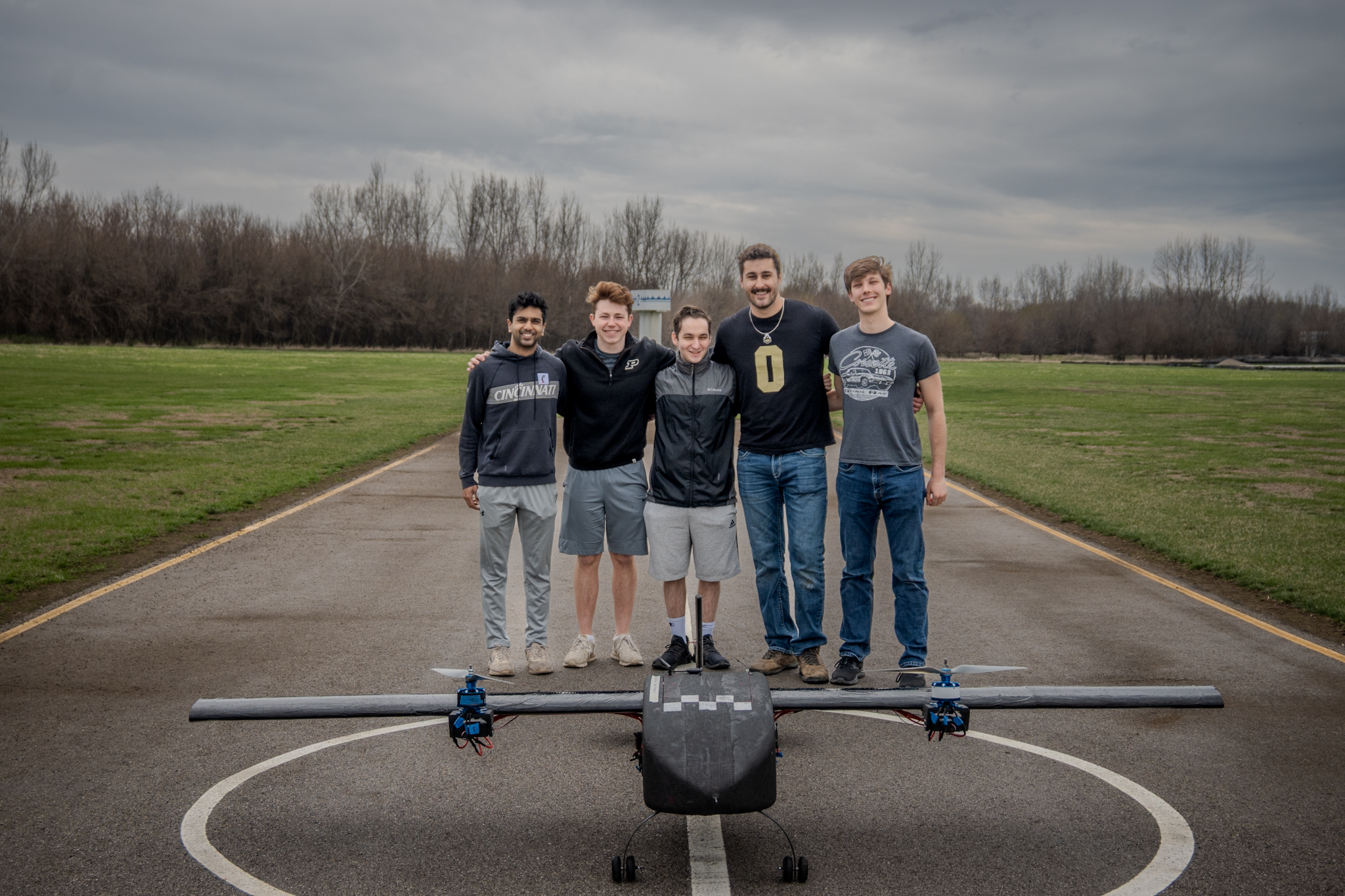
"Dodo" is an R&D aircraft which was designed and built to prove the concept of VTOL flight with a winched payload as a solution to the annual SUAS competition. As the manufacturing and analysis lead for the R&D Division, I was responsible for leading two teams of 6-10 students in the construction and testing of the aircraft. The aircraft completed a successful mission of vertical takeoff, transition to forward flight, delivery of a winched payload and return to a vertical landing. In doing so, it became the largest tilt-rotor aircraft built by a collegiate team in the nation.
In my role as the head of manufacturing, I oversaw and lead the component manufacturing and assembly of the plane. For the fuselage, a carbon fiber shell with a wooden internal structure held all internal components. The shell was two halves laid up by hand over a positive foam mold, cut out by a CNC gantry router. The internals were laser cut and assembled with 3D printed connections. The wings were cut on a hot wire, and attached using carbon fiber spars. As the team lead, I completed all CNC tool-pathing, as well as guided the carbon fiber layup process.
In addition to the manufacturing, I also lead the teams flight testing and resulting controls work. Testing as a whole included contained subcomponents validation on mechanical systems such as the tiltrotors, but also full flight tests of the entire aircraft. Ardupilot was used as the primary flight software, and a combination of flight logs and video were used to improve flight control through PID tuning. Logs pulled from both the crashes and short test flights were crucial in perfecting transition capabilities as well.
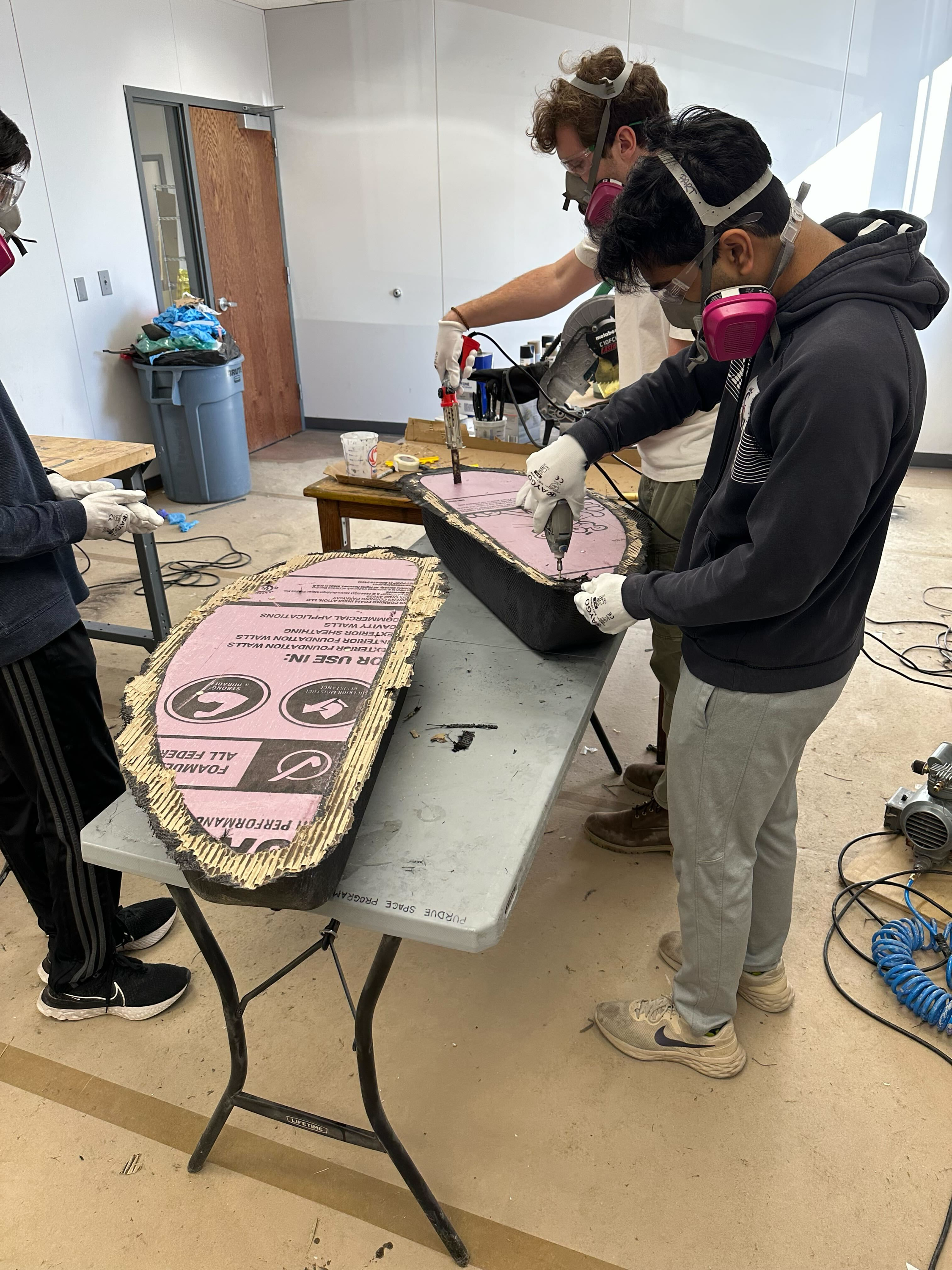
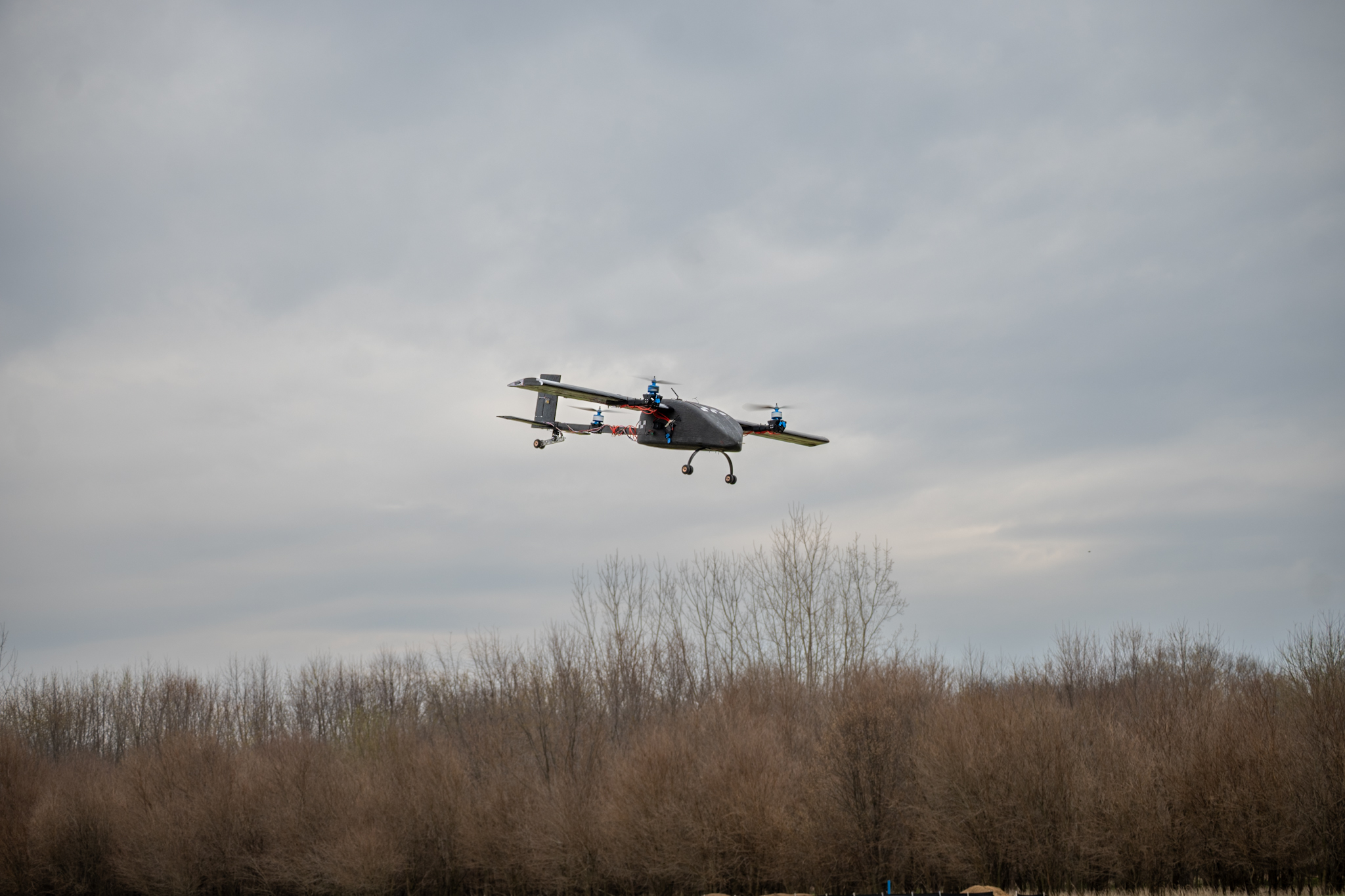
The biggest challenges for the build were getting consistent results for easy assembly despite using various manufacturing methods, and solving problems without hindering the aerodynamic integrity of the aircraft. As a mechanical engineer, design for assembly and manufacturing have always been priorities, however when it comes to aircrafts, the ability to safely fly is the most important aspect. This forced me to come up with creative solutions and learn new methods to manufacture essential components. After 9 months of design, 10 weeks of construction and 2 crashes with rebuilds, "Dodo" completed a full successful mission and proved large-scale VTOL capabilities.